
Imagine waking at dawn in a whitewashed village overlooking the Libyan Sea, with a private guide waiting to show you secret monasteries that tourists never find—or picture yourself navigating crowded archaeological sites in a coach of forty strangers, lunch included but your pace dictated by the group. Private tours in Crete offer unparalleled flexibility and intimacy, whilst group tours provide community and value for money. This guide cuts through the marketing noise to help you choose the touring style that genuinely matches your travel personality, budget, and what you want from the island.
Want a quick answer? Message us on WhatsApp or fill in our trip-planning form — we reply the same day.
Understanding the Crete Tourism Landscape
Crete, Greece’s largest island, stretches 260 kilometres from east to west and draws over three million visitors annually. The tourism infrastructure here has matured into distinct pathways: the organised tour operator model dominates the western zones around Chania (75 km from Rethymno) and the eastern resorts near Heraklion, whilst private touring remains the preference of discerning travellers seeking depth over volume. The island’s geography itself—a spine of mountains (Mount Ida reaches 2,456 metres) with isolated gorges, remote beaches, and mountain villages—creates an immediate practical divide: group tours follow established logistical routes, whilst private guides can adapt to weather, your energy levels, and spontaneous discoveries.
The choice between private and group tours fundamentally reflects what “experiencing Crete” means to you. Group tours excel at efficiency: they bundle transport, admission fees, lunch, and commentary into a single booking, often cheaper per person than assembling a private equivalent. They suit travellers who enjoy social interaction, prefer predetermined itineraries, and value the expertise of a professional guide without customisation logistics. The Samaria Gorge trek (18 kilometres, typically €35–45 per person via group operators) epitomises this: the route is fixed, departure times are firm, and you’ll meet other hikers. Private tours, conversely, ask a different question: if cost were equal, would you still choose the group experience? Many discover the answer is no.
Crete’s cultural and natural treasures actually reward private exploration. The Minoan palace complexes—Knossos (6 kilometres south of Heraklion, 35°18’21.8″N 25°09’48.4″E), Phaistos (63 kilometres southwest, 35°02’48.0″N 24°46’54.0″E)—are best understood with unhurried interpretation and the ability to sit quietly in less-crowded zones. Mountain villages like Anogeia (50 kilometres south of Chania, 1,100 metres elevation) remain genuinely unchanged; a private guide who knows the village baker or the keeper of the weaving workshop opens doors group itineraries cannot access. The Venetian harbour towns of Chania and Rethymno reward wandering without schedules, ducking into family-run mezze restaurants at lunchtime, and catching the light at specific hours—all impossible on a predetermined tour.
Tourism seasonality in Crete creates another layer of decision-making. July and August bring cruise ships that disgorge 3,000–4,000 passengers daily; group tours thrive in this volume-driven environment, and prices reflect demand. May–June and September–October offer a sweet spot: the weather is stable, the island is busier than winter but not overwhelmed, and private guides can deliver exceptional experiences. Winter (November–March) is quieter still; many group operators reduce schedules, and here private touring becomes genuinely advantageous, allowing flexibility around seasonal winds, rainfall, and the island’s winter character.
The Private Tour Advantage: What You’re Actually Paying For
Customisation and Pacing
Private tours in Crete cost between €250–500 per person per day for a small group (2–6 people) or €400–800 for couples, inclusive of transport, guide, and admission fees. This appears expensive set against a group tour at €60–80 per person for a full day. The economic gap narrows considerably, however, when you account for what private touring delivers: your itinerary begins when you wake, adapts to your interests in real-time, and ends when you’ve had enough—not when the operator’s schedule demands. If you’re fascinated by Byzantine frescoes, a private guide simply spends three hours showing you the churches of the Apokoronas region (45 kilometres southeast of Chania) rather than the standardised 90 minutes. If someone in your group tires, you pause for coffee without guilt.
The practical reality is that private guides typically manage 2–4 groups daily or 4–8 clients weekly, compared to a group tour operator managing 40–60 clients daily across multiple simultaneous tours. This arithmetic matters. A guide with eight clients that week can spend 30 minutes explaining the Minoan worship rituals at Knossos; a guide with 60 can offer five minutes before moving the group to the gift shop. Your pace becomes negotiable and human-scaled. Families with young children discover this benefit immediately: if your five-year-old becomes transfixed by the goats at a hillside village, you stay; a group operator cannot.
Access to Experiences Beyond the Standard
Private guides possess relationships. That matters in Crete. A guide who has worked a region for five years knows the taverna owner in Kritsa village (28 kilometres east of Heraklion), the keeper of the family weaving workshop in Axos (45 kilometres south of Chania), and the beachfront fisherman who will show you how nets are mended. These aren’t paid performances; they’re genuine community relationships that naturally include visitors. A group tour operator cannot build these; it scales impossibly. Your private guide can arrange a cooking lesson with a local family in the Rethymno region (lunch included, €85–120 per person), a private wine tasting at a family vineyard near Archanes (€65–95 per person), or access to the weaving cooperative in Kritsa that restricts daily visitors to maintain quality. Crete private tours designed by experienced operators explicitly build these moments into itineraries because they’re what justify the premium cost.
Consider also timing advantages. The archaeological sites of Crete—particularly Knossos, Phaistos, and the smaller palace of Malia (34 kilometres east of Heraklion)—welcome groups at prescribed hours. Tour operators work within these windows; private guides, however, can arrange early-entry or late-entry access (subject to site policy and €50–100 additional fees) to experience these places with substantially fewer visitors. Knossos at 08:00, before the 09:30 group-tour influx, is an entirely different experience. The soft light catches the reconstructed columns differently; the echoes of footsteps are sparse; photography becomes viable.
Group Tours: Genuine Strengths You Shouldn’t Overlook
The social architecture of group tours creates authentic value that privatisation cannot replicate. Meeting ten strangers on a coach and exiting as acquaintances—or even friends—remains a genuine tourism pleasure. Shared wonder at the Golden Beach near Tsoutsouros (130 kilometres south of Heraklion, where sand literally glimmers with mica particles), collaborative problem-solving when navigating the Samaria Gorge, or laughing together over a difficult translation at a family taverna: these moments feel different in groups than privately. Some travellers, particularly solo travellers and those seeking community, find group tours emotionally rewarding in ways private experiences simply cannot match.
The financial argument for groups remains substantial. A full-day group excursion to the Samaria Gorge from Chania, including transport, a packed lunch, and a guide, typically costs €45–65 per person. The equivalent private experience—private driver, private guide with deep gorge expertise, packed provisions—runs €300–400 for two people or €450–550 for three, equivalent to €150–185 per person. For budget-conscious travellers, particularly families or groups of six or more, this difference is material. Group tours also handle logistics you might overlook: they know precisely where to park, which entrance avoids queues, how long each section realistically takes. First-time visitors benefit from this structure.
Group tours also offer psychological comfort through delegation. You’ve booked your tour; your only responsibility is showing up at 08:00 at your hotel. Everything else—navigation, timing, where to eat, what to do if the weather changes—belongs to the operator. For some travellers, particularly those who find holiday planning stressful, this is precisely the appeal. You don’t need to make micro-decisions throughout the day; you simply follow the guide and absorb the experience. This is especially valuable if you’re elderly, very young children are in your party, or you’re visiting Crete during your only Greek holiday and want to concentrate on presence rather than logistics.
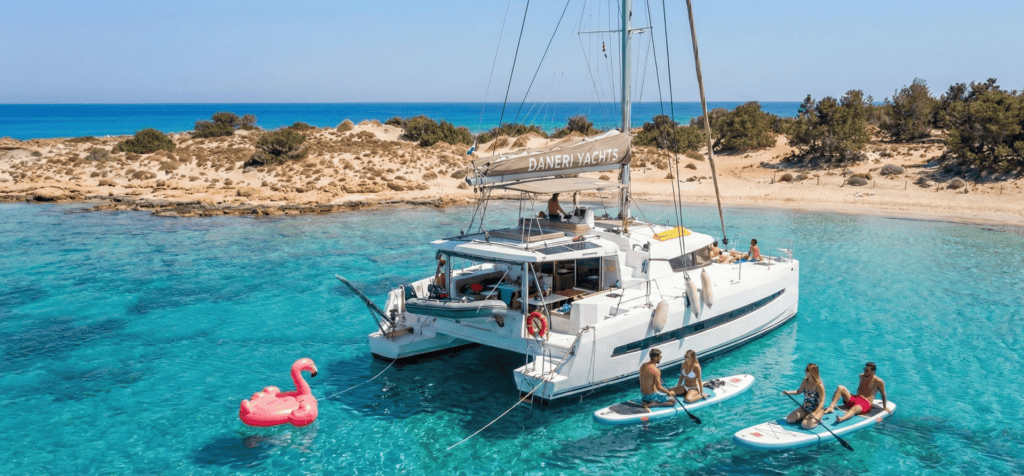
Many group tours also include elements solo travellers and even small groups would struggle to arrange privately. A full-day boat excursion to the islands of Spinalonga and Gramvoussa (northwest Crete, approximately 75 kilometres from Chania) includes swimming at multiple sites, fish lunch aboard the boat, and typically costs €50–70 per person through group operators. Assembling a private equivalent requires booking a private boat charter at €600–900 for the day (minimum; see private yacht charter in Crete for premium options), dividing that among your group. For two people, that’s €300–450 each—nearly five times the group rate—though admittedly without crowds and with full schedule flexibility.
Accommodation, Dining, and the Hidden Costs of Both Models
Group tours account for admission fees, transport, and guide services but rarely include meals beyond a lunch box. Your breakfast, dinners, and drinks remain your responsibility. Crete’s dining landscape spans dramatically: a meal in a tourist-oriented taverna in Chania’s old harbour costs €25–40 per person; a family-run mezze place in a mountain village costs €12–18; a fine-dining experience at one of Rethymno’s better restaurants reaches €50–80. Budget accordingly. Private tour groups, meanwhile, often build restaurant choices into customised itineraries, sometimes pre-arranging reservations at places group tours cannot access. The difference: sitting alone in a taverna eating what the menu offers, versus the guide calling ahead to a family kitchen that will prepare something tailored to dietary needs or preferences—for the same price.
Accommodation costs rarely shift between private and group tourism, as both typically involve independent hotel booking. Crete’s accommodation ranges from €60–120 per night for comfortable three-star properties in smaller towns (Rethymno, Agios Nikolaos) to €180–350 for four-star beach hotels. Private tour operators occasionally offer accommodation packages bundling lodging with daily tours at 10–15 percent discounts; investigate whether this exists before booking.
The true hidden cost of group tours emerges in time value. A seven-hour group excursion departing at 08:00 returns at 15:30, consuming your entire day despite perhaps four hours of actual activity. The remaining three hours account for driver time between sites, lunch logistics, and restroom stops. Private tours compress this: the same content typically executes in five hours, allowing you to use the remaining daylight. Over a week, this compounds to almost a full extra day of discretionary time—genuinely significant when your holiday is only ten days.
Comparative Overview: Private vs Group Tours
| Factor | Private Tours | Group Tours |
|---|---|---|
| Cost per person/day | €250–500 (2–4 people); €150–250 (6+ people) | €45–120 |
| Itinerary flexibility | Complete; can change hourly based on interests | Fixed; predetermined sites and times |
| Group size | 2–8 people typically | 20–60 people |
| Social interaction | Limited unless you book with friends/family | High; meet other travellers |
| Guide knowledge depth | Deep; 30+ min per topic typical | Broad overview; 5–10 min per topic |
| Local access/experiences | High; family connections, village relationships | Standard; published attractions only |
| Crowd levels at sites | Lower; often early-entry or off-peak timing | Higher; peak tourism hours standard |
| Meals included | Often pre-arranged; dietary accommodation easy | Lunch typically included; limited customisation |
| Best suited to | Families, couples, specific interests, luxury seekers | Solo travellers, budget visitors, community-minded |
| Booking flexibility | Often customisable; planned months ahead | Fixed dates; book 1–2 weeks ahead |
Practical Logistics: Getting Around, Timing, and Seasonal Considerations
Crete’s main airport, Nikos Kazantzakis International, sits 4 kilometres east of Heraklion (35°20’42.3″N 25°10’51.7″E). Transfer options immediately reflect the private vs group divide: a private transfer (4–6 passengers in an air-conditioned vehicle, approximately 25 minutes to Chania centre) costs €60–85 from the airport. A shared shuttle service through a tour operator costs €25–35 per person but adds 90 minutes as you wait for other passengers and navigate multiple hotels. This isn’t trivial when you’ve just landed and want to begin your holiday. Private airport transfers in Crete typically collect you within 20 minutes of baggage claim; group shuttles operate on fixed schedules (usually 09:00, 13:00, 17:00) and wait for full coaches.
Within-island transportation follows similar logic. A private driver (through a booking like those offered by premium operators) costs €0.70–1.00 per kilometre, meaning a journey from Chania to Samaria Gorge (65 kilometres, approximately 75 minutes) costs €45–65 each way. Group tours bundle this into their daily fee. However, the private driver can adjust routes based on weather or your energy—if Samaria looks weather-vulnerable, you pivot to the sheltered Imbros Gorge (35 kilometres from Chania, 1,000–1,200 metres elevation, approximately 3 hours trekking) without penalty. Group operators cannot.
Seasonality reshapes both options. May–June and September–October offer ideal conditions: warm but not scorching (daytime temperatures 24–28°C), fewer cruise-ship arrivals, and all attractions operating at normal hours. July–August brings intense heat (32–36°C), crowds from cruise ships (particularly 10:00–16:00 at major sites), and group tour availability at maximum. Group tours actually make sense in peak season because everyone is dealing with crowds regardless; you might as well divide the logistics. November–April brings rainfall (typically 3–4 rainy days per week in winter months), but also dramatically fewer tourists. Private guides excel here: a rainy day prompts pivot to indoor museums or village exploration, impossible with group logistics. Easter week (whenever it falls in the Orthodox calendar) sees Crete packed; avoid both private and group touring then if possible.
Journey times matter psychologically. From Chania to Phaistos palace (200 kilometres, approximately 2.5–3 hours) is a long drive. Group tours sometimes split this with a mid-journey stop at a tourist shop (which profits the operator). Private tours can stop at will: 40 minutes at the family winery near Archanes, a proper lunch at a village taverna rather than a box lunch, or a walk through the orange groves near Rethymno. These aren’t time savers; they transform the journey into part of the experience rather than dead time.
💬 Chat on WhatsApp — Plan Your Trip
💬 Chat on WhatsApp — Plan Your Trip
Frequently Asked Questions
Are private tours worth the extra cost?
Private tours typically cost 4–10 times more per person than group alternatives, but deliver substantially customised experiences, local access, and flexibility. The value depends on your priorities: if you value spontaneity, dietary accommodation, in-depth expertise on specific topics, or group control, private tours justify the cost. If you prioritise budget and social interaction, groups make sense.
Can I book a private tour for just two people?
Yes, most private operators accommodate couples, though per-person costs rise (typically €250–350 per person daily for a couple versus €150–200 per person for a group of four). Some operators offer occasional fixed-date group-size tours at discounted per-person rates if you’re willing to join strangers—a hybrid model worth investigating.
Do group tours include all meals?
Group tours typically include a packed lunch (sometimes a taverna lunch) but not breakfast or dinner. Private tours often pre-arrange restaurant reservations and sometimes include lunches at family-run establishments not available to group bookings, though meals remain an additional cost unless explicitly bundled.
What’s the best season for private tours in Crete?
May–June and September–October offer ideal conditions: stable weather, fewer cruise ships, and full operational availability. Private tours excel in these periods because guides can adapt to weather and aren’t competing for space with 60-person groups. Winter (November–March) is excellent for private touring due to reduced crowds, though rainy days require flexibility.
Are private guides more knowledgeable than group tour guides?
Not necessarily more knowledgeable overall, but able to engage knowledge more deeply. A private guide covers fewer sites in greater detail; a group guide offers breadth at the expense of depth. Your satisfaction depends on preference: would you rather learn everything about three things or something about twelve things?
Insider Secrets: What Standard Travel Guides Miss
Private guides with genuine expertise navigate Crete’s archaeology with nuance that group tours cannot. Most visitors encounter Minoan culture through Knossos palace, which is partially reconstructed—Arthur Evans’s 1920s-era work is increasingly questioned by modern archaeologists. A private guide worth hiring knows the debate, walks you through the evidence, and often takes you to less-polished but more authentic excavations like the palace complex at Arkadia (85 kilometres south of Chania, 35°13’34.0″N 24°21’39.0″E), where you see actual Minoan work uncovered decades ago and left largely untouched. Knossos remains impressive; Arkadia teaches you something about how we know what we know.
The village tourism model deserves scrutiny that neither private nor group operators always provide. Several villages—Kritsa being the most famous—have become semi-theatrical: the women who weave now sell the textiles simultaneously to visitors; the tavernas serve versions of traditional food optimised for tourist palates. These aren’t inauthentic (the weaving is real, the recipes are genuine), but they’re curated performances. A truly exceptional private guide knows three or four villages in the interior mountains where tourism remains genuinely minimal: you’ll sit with a grandmother who speaks no English, she’ll serve you something she happened to be cooking for family lunch, and the exchange will be genuinely humanistic rather than commercially mediated. Such visits happen by introduction and relationship, not booking form—precisely the value of private guides with deep local networks.
Crete’s Orthodox traditions remain largely invisible to group tourism, yet profoundly shape the island. The monastery of Koudouma (eastern Crete, 35°03’29.5″N 25°43’55.2″E) welcomes visitors, but not during the 05:00–06:30 morning offices when the monks chant; a private guide can arrange your arrival for 06:45, after the office concludes, when you experience the space as monks experience it, still resonant with incense and sound. The frescoed Byzantine churches of the Apokoronas region (west of Chania) rarely appear on group itineraries, despite containing some of Crete’s most moving medieval art. These are not hidden because they’re secret; they’re overlooked because group logistics don’t accommodate the 30 minutes of driving between three sites when group tours need to maximise visitor count.
Photography timing is rarely discussed but matters if images are important to you. Knossos palace at 08:15 (before crowds, warm morning light) versus 13:30 (harsh midday sun, hundreds of people) is photographically an entirely different site. The Samaria Gorge photographed at 06:30 departure (soft golden light, silence, solitude) differs fundamentally from the 09:00 group departure (pale overhead light, echoing footsteps, congestion). Private tours can prioritise light quality; group tours prioritise logistics. If you’re a serious photographer—or simply want to actually enjoy viewing sites rather than crowding through them—this matters enormously.
Understanding Real Costs and Where to Find Value
Private tours in Crete typically structure pricing as follows: a full day (08:00–17:00, approximately 8 hours) for 2–3 people costs €350–450 including a professional guide, private vehicle transport, and admission fees (entrance fees run €15–25 per major site). Per person, this reaches €175–225. For a couple, this is steep; for a group of three, more reasonable. Adding a second day drops the per-day cost to €300–400 (guides discount multi-day bookings by 10–15 percent). A week of daily private touring runs €2,000–2,800 for two people, or €1,400–2,000 for a group of three. Equivalent group tours over the same period cost €350–700 total (€175–350 per person), a dramatic difference.
However, private tour pricing often excludes meals and drinks, whilst some group tours include lunch. Budget an additional €25–45 per person daily for meals when private touring (breakfast €12–18, lunch €18–28, dinner €25–45 depending on venue choice). This narrows the gap. A couple spending €200 per person on private touring plus €35 per person on meals reaches €235 per person daily; a group tour at €90 per person including lunch costs €90—less than half. But you’ve received roughly double the guide attention, visited fewer sites (perhaps three instead of five, but deeply), adjusted to your pace, and avoided queues.
Where value emerges most clearly: luxury experiences that private operators can arrange and group tours cannot. A sunset beach picnic with wine and local cheese (€95–150 per person, private arrangement) becomes a memory of exceptional intimacy. A cooking class with a local family in Chania (€120 per person) teaches you skills and cultural context simultaneously. A private wine tasting at a family winery near Archanes (€80–110 per person) includes vineyard stories, food pairings, and often a discount on purchases. These experiences, when valued at €800–1,200 weekly, can justify the private tour premium if they’re genuinely what you want from Crete. If you simply want to see as many famous sites as possible cheaply, group tours win decisively.
Booking mechanics matter. Direct booking through established private operators (versus third-party booking sites that mark up 20–30 percent) saves money meaningfully. A tour listed at €450 through Viator or GetYourGuide might cost €350–380 booked directly with the operator. For a week’s touring, this difference reaches €400–500—genuinely significant. Request quotes from multiple operators; in Crete’s private touring sector, competition remains robust and discounts for longer bookings or off-season travel are common. WhatsApp quotes (faster, more personable than email) often come lower than website-listed prices.
Cost Breakdown Comparison Table
| Expense Category | Private Tour (2 people/day) | Group Tour (per person/day) | Notes |
|---|---|---|---|
| Guide + Vehicle | €350–450/day (€175–225 pp) | €45–80 | Largest cost component; private includes dedicated attention |
| Admission Fees | €30–50/day (included in private tour) | €15–25 | Major sites: Knossos €15, Phaistos €12, Samaria €5 |
| Lunch | €18–35 (not included; you choose) | €0–12 (often included) | Private offers flexibility; group lunch is standardised |
| Breakfast | €12–18 (separate) | €12–18 (separate) | Both require independent booking/eating |
| Dinner | €25–45 (separate) | €25–45 (separate) | Both independent; private guides often recommend best venues |
| Drinks/Coffee | €3–6/coffee (€12–20 daily) | €3–6/coffee (€12–20 daily) | Similar; private guides often cover their own |
| Tips/Gratuity | €40–60/day recommended | €5–10/person/day | Private guides are self-employed; 15% tip standard |
| TOTAL per person/day | €220–295 | €100–150 | Private ~2.5× group cost; customisation premium |
Extending Your Private Experience: Multi-Day Tours and Beyond
Many private tour operators in Crete offer multi-day experiences that transcend single-day excursions. A three-day private tour combining Crete’s western coast (Chania, the Pink Beach near Elafonissi, the Samaria Gorge) with a base in Chania costs €850–1,100 per person, inclusive of accommodation (mid-range three-star hotel), daily guided tours, most meals, and transport. Compared to assembling the same three days privately (accommodation €100 per night, private guide €200–250 daily, meals €30–40 daily), the bundled cost is actually competitive and eliminates booking complexity. These multi-day offerings work particularly well for couples or small families seeking coherent experiences without logistics burden. Multi-day tours from Crete often extend to nearby islands (Santorini, the Dodecanese) or to the Greek mainland, allowing you to experience Crete within a broader Greek context. A common framework: four days in Crete, two days island-hopping to Santorini, creating a 6-day Greek experience without repeatedly rebooking transport and accommodation.
The logical extension for those with luxury budgets: combining Crete private touring with private boat charters. Imagine a four-day itinerary: two days exploring Crete’s southern coast and mountain villages via private guide (Samaria Gorge, the Lassithi Plateau with its windmills, the freshwater lake of Kournas), then a two-day private yacht charter visiting the Spinalonga fortress, the Gramvoussa islands, and isolated beaches accessible only by boat. This hybrid approach costs €3,200–4,500 for two people but delivers experiences genuinely inaccessible to group tourism. The yacht charter component (€800–1,200 daily for a small sailing yacht, fuel and skipper included) seems expensive until you realise group boat excursions can accommodate 50–80 people in conditions ranging from crowded to claustrophobic; a private eight-metre yacht accommodates four comfortably.
Consider also the value of extending your private Crete experience with day trips to connected destinations. Santorini day trips from Crete (typically 1 hour by fast ferry, €15–25 per person each way) work brilliantly as a private addon: rather than taking a group boat tour (€65–85 per person), book a private guide meeting you at Santorini’s port, explore at your pace (the caldera, the volcanic beaches, the villages of Oia and Perivolos), and return to Crete that evening. This maximises both islands’ experiences without sacrificing flexibility. Athens day trips from Crete are logistically harder (requiring a 1-hour flight each way, €80–140 per person plus transport), but viable for those with a week in Greece prioritising the capital alongside the islands.
Insider Recommendations: Who Should Choose What
Private tours suit: couples (honeymoons, anniversaries, reconnection trips), families with specific interests or unusual logistics (dietary restrictions, very young children, different fitness levels), travellers visiting Crete after prior Greek trips who want depth rather than breadth, photographers prioritising light and fewer crowds, and those with genuine expertise in a topic (archaeology, botany, Byzantine history) who want guides matching their knowledge level. Private tours also serve groups of six or more friends or family members splitting the cost, where per-person pricing becomes reasonable (€120–180 per person for larger groups) and group cohesion is already established.
Group tours suit: solo travellers seeking community and conversation, budget-conscious visitors where money genuinely constrains choices, first-time Crete visitors wanting efficient breadth (seeing the main sites without deep research), and those who enjoy structured social experiences and don’t mind time allocation being someone else’s decision. Group tours also work for those with mobility limitations (guides provide wheelchairs and accessibility support), families with teenagers who might find six hours in a car tedious but appreciate mixing with peer groups, and cruise ship passengers with limited time (typically 07:00–18:00 onshore) where group logistics maximise what’s possible in a day.
A hybrid approach: book a private guide for 2–3 days (depth, relationships, unusual sites) and group tours for 1–2 days (major sites you want to experience socially, cost-efficiency on logistics-heavy excursions like boat trips to islands). This balances budget, flexibility, and social engagement—genuinely optimal for many travellers. Cruise ship passengers particularly benefit from this mix: take a group shore excursion on day one (time-efficient), private touring on day two (deeper experience), and a relaxation day on the ship on day three if your port schedule allows.
Final Reflection: Moving Beyond the False Choice
The private versus group touring question, ultimately, isn’t binary. It’s a spectrum. Premium travel operators increasingly offer tiered products: small group tours (6–12 people, guides more attentive than mega-groups but cheaper than private), semi-private tours (booking flexibility, group itineraries), and fully customised private experiences. Some operators offer “guaranteed departures” where you book an itinerary and the operator confirms it will depart on your chosen date whether two people book or ten; this creates a private experience at nearly group pricing.
The decision genuinely hinges on what you need most: Is it budget? Group tours win decisively. Is it flexibility? Private tours dominate. Is it social community? Groups excel. Is it depth of knowledge? Private guides deliver. Is it access to local relationships? Private guides with years in-region are essential. Is it efficiency and seeing major sites? Group tours are designed precisely for this. Is it relaxation from decision-making? Groups provide it. Is it the ability to pause, sit quietly, and absorb something extraordinary? Private tours enable it. Honest self-assessment of what you actually value about travel—not what you think you should value—should guide your choice far more than cost comparison spreadsheets.
Planning a private trip to Crete? 105 Olives Greece designs tailor-made luxury experiences. Explore more Crete travel guides →
