
Staying connected across Crete’s sun-drenched coastlines and mountainous interior doesn’t have to be a battle against poor signal and roaming charges. Whether you’re a digital nomad managing emails from a clifftop café in Chania, a family streaming entertainment in your holiday villa near Rethymno, or simply trying to share that perfect sunset photo from Balos Lagoon, understanding Crete’s internet and WiFi options will transform your stay from frustrating to seamless. This guide cuts through the confusion around Greek SIM cards, mobile providers, and connectivity solutions so you can focus on what matters—exploring this magnificent island without digital anxiety.
Want a quick answer? Message us on WhatsApp or fill in our trip-planning form — we reply the same day.
Understanding Crete’s Internet Infrastructure & Network Coverage
Crete’s telecommunications landscape has undergone a dramatic transformation over the past decade, evolving from patchy rural coverage to a relatively sophisticated mobile and broadband network. The island benefits from three major mobile operators—Vodafone Greece, Cosmote (OTE Group), and Wind Hellas—each competing intensely for market share, which translates into competitive pricing and widespread coverage for visitors. However, the reality on the ground is nuanced: while Chania, Rethymno, and Heraklion city centres enjoy excellent 4G and 5G coverage, more remote areas—particularly the mountains of the White Mountains (Lefka Ori) near Chania, the Psiloritis range in central Crete, and certain beaches accessible only by boat—may experience intermittent signal or fall back to slower 3G speeds.
The island’s topography plays a critical role in connectivity patterns. Crete’s mountainous spine, reaching heights of 2,456 metres at Mount Psiloritis (also called Ida), creates natural dead zones and signal shadows that even well-funded operators struggle to overcome completely. Coastal towns like Chania (approximately 45 km west of Heraklion), Rethymno (roughly 80 km west of Heraklion), and Agios Nikolaos (65 km east of Heraklion) maintain robust networks, but venture into villages like Anogia, Vryses, or the southern coast settlements near Plakias, and you’ll encounter more variable coverage. That said, Greek operators have made significant investments in infrastructure, and you’ll find that even small villages typically have adequate signal for messaging, voice calls, and basic data usage.
Internet penetration across tourist accommodation has improved substantially. Most hotels, apartments, and villas now offer WiFi as standard, though quality varies considerably. Five-star properties and contemporary boutique hotels typically provide fibre-optic connections with speeds of 50+ Mbps, whilst budget guesthouses may still rely on older ADSL or even satellite connections offering 5-15 Mbps. The critical difference lies in stability and peak-hour performance—a family-run taverna in Plakias might offer “free WiFi,” but expecting to upload 4K video or join a professional video conference during dinner service is unrealistic. Understanding these nuances helps set realistic expectations and allows you to plan around connectivity requirements rather than being frustrated by them.
Greece’s EU membership means that roaming regulations are strictly enforced under the EU Roaming Regulation, which eliminates many roaming charges for EU citizens. However, non-EU visitors and those with specific requirements should not assume free data—many providers impose caps or charge at rates equivalent to their home country. Post-Brexit UK citizens, Australian visitors, and others face standard international roaming rates unless they’ve specifically arranged a roaming package. The key to avoiding surprise charges and ensuring consistent connectivity lies in understanding your options before arrival and making deliberate choices based on your actual usage patterns and trip duration.
Greek Mobile Operators: Vodafone, Cosmote & Wind Hellas Compared
Vodafone Greece: Premium Network & Best Tourist Coverage
Vodafone Greece maintains the most extensive 4G coverage across Crete and is widely considered the gold standard for tourist connectivity. Their network reaches approximately 99% of the island’s population centres and 94% of its total area, making them the safest choice if consistent connectivity is your priority. Vodafone operates multiple SIM card options specifically designed for visitors: their “Tourist SIM” or “Visitor SIM” can be purchased at Heraklion Airport (Nikos Kazantzakis International Airport), Chania Airport (Ioannis Daskalogiannis International Airport), or any of their retail shops in city centres. A typical tourist package costs €19.99 for 10 GB of 4G data valid for 30 days, with additional options ranging from €9.99 for 3 GB to €39.99 for 20 GB, plus unlimited calls and texts within Greece.
What distinguishes Vodafone is their customer service infrastructure and English-language support, particularly valuable if you encounter problems during your stay. Their stores in Chania’s Old Town (near Santrivani Square), Rethymno’s city centre, and all three airport terminals employ English-speaking staff familiar with tourist needs. Data speeds on their network typically reach 15-30 Mbps in city centres, though rural areas may drop to 5-10 Mbps. For visitors planning to book Crete private tours or coordinate with ground operators, Vodafone’s reliability makes it ideal—you won’t experience the frustration of missed calls or delayed confirmations that can derail carefully planned activities.
Cosmote (OTE Group): Best Local Integration & Village Coverage
Cosmote, Greece’s incumbent telecommunications provider and part of the OTE Group, offers the most extensive overall network infrastructure on Crete, particularly in smaller villages and rural areas. They’ve inherited decades of investment in legacy infrastructure, meaning coverage extends to places competitors’ towers haven’t yet reached. For visitors spending significant time in village communities—perhaps exploring Cretan gastronomy in Vlysidia (south of Rethymno), or staying in mountain villages like Kritsa near Agios Nikolaos—Cosmote frequently provides better signal consistency than competitors. Their tourist SIM packages start at €15 for 5 GB plus €3 credit for calls/texts, escalating to €35 for 20 GB, making them a genuinely budget-friendly option.
The practical drawback is that Cosmote’s customer service for English-speaking tourists is noticeably weaker than Vodafone’s. Their stores exist in city centres but staff turnover is higher, and English proficiency is inconsistent. This matters less if you’re simply maintaining basic connectivity but becomes frustrating if you need to troubleshoot issues or modify your plan mid-trip. Purchasing a Cosmote SIM is straightforward—they maintain a kiosk at Heraklion Airport and numerous street-level shops throughout Chania and Rethymno—but the activation process is slower and less tourist-friendly than Vodafone’s streamlined approach.
Wind Hellas: Competitive Pricing & Secondary Option
Wind Hellas (branded as “WIND” or “Orange” in certain contexts) operates as the third major player and offers genuinely competitive pricing that undercuts Vodafone whilst matching Cosmote’s coverage in most areas. Their tourist packages begin at €12.99 for 4 GB over 30 days, with premium options reaching €29.99 for 25 GB, making them attractive for budget-conscious travellers. Network quality is generally solid in urban areas—expect 12-25 Mbps in Chania or Heraklion—though speeds can degrade in rural zones more noticeably than on Vodafone’s network.
Wind Hellas’s principal advantage is value; their principal disadvantage is inconsistent customer support infrastructure at tourist locations. Finding a Wind store in smaller towns requires more hunting than Vodafone or Cosmote. Unless you have specific cost-minimisation requirements, Vodafone remains the more pragmatic choice for most tourists despite slightly higher pricing. However, if you’re staying exclusively in city-centre accommodation and already speak basic Greek, Wind’s savings could meaningfully offset the lack of English-language support.
| Provider | Entry-Level Package | Premium Package (20GB+) | Airport Availability | Best For | Average 4G Speed (Mbps) |
|---|---|---|---|---|---|
| Vodafone Greece | €19.99 (10GB) | €39.99 (20GB) | Yes—both airports | Tourist reliability | 15–30 |
| Cosmote (OTE) | €15 (5GB) | €35 (20GB) | Yes—Heraklion | Rural coverage | 10–24 |
| Wind Hellas | €12.99 (4GB) | €29.99 (25GB) | Limited availability | Budget option | 12–25 |
| Multi-operator | €20–35 (varies) | €50–80 (3-4 operators) | Yes—tourist shops | Maximum redundancy | Varies |
| EU Roaming (home SIM) | Variable | Variable | N/A | EU citizens | Variable |
Purchasing SIM Cards: Where to Buy & Activation Process
Obtaining a Cretan mobile SIM card is straightforward, with multiple purchase points and minimal bureaucracy compared to some countries’ requirements. The most convenient location for airport arrivals is the dedicated mobile operator kiosks in both Heraklion Airport (Nikos Kazantzakis International, situated 5 km south-east of the city centre) and Chania Airport (Ioannis Daskalogiannis International, 14 km east of Chania’s Old Town). Both airports maintain staffed counters for Vodafone, with Cosmote present at Heraklion and Wind available through travel concierge services. Heraklion Airport’s terminals have been renovated recently and now feature clearly signposted retail zones; head toward the main terminal building’s right wing after clearing arrivals. Purchasing and activating a SIM typically takes 10-15 minutes; staff will request your passport (for ID verification required under Greek telecommunications law), insert your SIM, and test connectivity before you leave the counter.
Beyond airports, city-centre shops provide identical SIM card options and sometimes superior packages. Vodafone’s flagship store in Chania is located at Chalidon Street 95 (in the lower Old Town, approximately 200 metres north of the Venetian Harbour), open 09:00-20:00 Monday-Friday and 09:00-18:00 Saturday. Rethymno’s Vodafone shop sits on Paleologou Street near the city’s central square. In Heraklion, the main Vodafone store occupies the ground floor of a building on 25 Augoustou Street, within 100 metres of Fountain Square (Plateia Venizelou). Cosmote and Wind maintain similar locations; a simple Google Maps search for “Cosmote Chania” or “Wind Hellas Rethymno” will pinpoint the nearest option. City-centre shops occasionally offer loyalty discounts or bundled deals unavailable at airports, but these are inconsistent and shouldn’t be relied upon for tour planning.
If you’re arriving in Crete without a pre-arranged SIM, don’t panic—tourist-oriented accommodation can facilitate same-day activation. Many hotels, particularly in Chania, Rethymno, and Agios Nikolaos, maintain relationships with local shops and can arrange SIM purchase and delivery to your room for a small convenience fee (typically €3-5). Upmarket properties may even handle this proactively during check-in. This approach is especially valuable if you’re arriving late in the evening when airport kiosks may have reduced hours or if you’re staying in village accommodation without immediate access to a retailer. Simply inform your accommodation provider of your arrival time and mobile requirement, and they’ll typically coordinate the solution.
Activation requirements have been standardised across providers: Greek telecommunications law mandates ID verification for all SIM card purchases (even prepaid cards, which is stricter than many EU countries). Your passport is acceptable; EU national ID cards also work. You’ll need to provide a Greek phone number, which is generated during purchase—there’s no choice in the number assignment. Payment is cash or card; all providers maintain ATMs within walking distance of their retail locations. Once activated, your SIM is immediately functional and your data allowance is live; international roaming (for non-Greek numbers) requires explicit activation via your provider’s app or by visiting a shop, so plan accordingly if you need coverage outside Greece during your stay.
WiFi Options: Hotels, Cafés, Public Networks & Digital Nomad Solutions
Crete’s hospitality sector has embraced free WiFi as a standard amenity, though quality varies dramatically based on accommodation category and location. Five-star properties like the Mitsis Grand Hotel in Rethymno, the Stella Palace Resort in Chania, or the Elounda Mare near Agios Nikolaos universally provide fibre-optic broadband with 100+ Mbps speeds, dedicated networks for guest use, and technical support. These establishments invest in redundant connections and backup systems ensuring uninterrupted service. Mid-range hotels and contemporary apartments (€80-150 per night) typically offer adequate WiFi—expect 20-50 Mbps—though performance may degrade during peak evening hours when multiple guests are streaming simultaneously. Budget guesthouses and family-run establishments (€40-80 per night) are a crapshoot; some have invested in modern infrastructure and deliver perfectly respectable service, whilst others rely on legacy ADSL connections delivering 5-10 Mbps with unstable connections.
The practical implication: if consistent, high-speed internet is essential for your trip—whether you’re a freelancer managing client work, a business traveller attending video conferences, or simply someone who can’t function without streaming entertainment—budget for accommodation accordingly. When searching Booking.com, Airbnb, or Crete-specific platforms like VillasCrete.com, explicitly filter for “High-speed WiFi” or “Fibre broadband” in the amenities section. Read recent reviews mentioning internet quality; a property with 4.5-star ratings but zero mentions of connectivity is a red flag. Conversely, properties where multiple reviewers specifically praise internet quality are signal that your accommodation provider has invested in infrastructure. During booking, don’t hesitate to email properties directly asking for specific speed information (measured via speedtest.net) or requesting a trial video call before committing.
Beyond accommodation, Crete’s café culture and public spaces offer abundant secondary WiFi access. Coffee culture is serious in Greece—Chania and Rethymno both maintain hundreds of cafés where WiFi is free with a nominal purchase (typically €3-6 for a coffee or juice). For those seeking optimal work environments, modern coffee chains like Mikel Coffee (with locations in Chania, Rethymno, and Heraklion) and local favourites like To Steki tis Filis (Chania’s most atmospheric Old Town café, situated on a narrow pedestrian alley behind the Venetian Harbour) offer reliable, fast connections and comfortable seating suitable for extended work sessions. These spaces embody authentic Cretan café culture whilst providing serious digital infrastructure—many are equipped with power outlets and USB charging, essential for all-day working sessions. The unwritten café etiquette is straightforward: purchase a beverage or light meal (a pastry, salad, or sandwich costs €5-10), settle in for as long as you require, and you’re a welcome guest.
Public WiFi networks exist throughout Crete’s cities but are genuinely worth avoiding. Chania municipality provides “ChaniaMunicipal” and similar open networks near the Venetian Harbour and certain parks, but these are unencrypted and potentially insecure for any transaction involving passwords or financial information. The same caution applies to “FreeWiFi_Crete” or generic networks appearing in hotel lobbies without explicit authentication. If you must use public networks for work, invest in a reputable VPN service—ExpressVPN, NordVPN, or Mullvad all work reliably in Greece and cost €3-5 monthly. The modest cost is worthwhile insurance against data interception on shared networks. For digital nomads planning extended stays (2-4 weeks), consider booking a villa with private high-speed WiFi rather than relying on a succession of hotels; costs work out comparably (€80-120 nightly for a one-bedroom villa with dedicated 50+ Mbps connection) whilst providing guaranteed stability.
International Roaming, EU Regulations & Non-EU Visitor Considerations
The EU Roaming Regulation fundamentally transformed data costs for European visitors to Crete. Since 2017, EU/EEA citizens can use their home country mobile SIM card in Greece at domestic rates—meaning if you have an unlimited UK data plan, you can use it in Crete at no additional cost (provided you don’t trigger fair-use limits, typically 50-100 GB monthly for most providers). This eliminates the financial incentive to purchase a local SIM for most EU tourists. However, this benefit requires planning: before departure, contact your home provider and confirm that your SIM will function on Greek networks and that no additional roaming charges apply. Many budget-tier plans, particularly in the UK, impose roaming restrictions despite EU regulations; O2, Vodafone UK, and Three all require explicit opt-in for roaming usage or impose caps above which charging resumes. This conversation takes five minutes via phone or online chat and is genuinely worth undertaking.
For non-EU visitors—Australian, Canadian, American, South African, and other non-European citizens—international roaming charges typically apply at your home provider’s standard rates. These can be shockingly expensive: a typical Australian provider might charge €12-15 per gigabyte of roaming data, rendering a 10 GB holiday spend €120-150 purely on mobile data. This scenario makes local SIM purchases not merely convenient but essential. Practically speaking, any non-EU visitor remaining in Crete longer than 3-4 days should purchase a local SIM card; the €15-25 cost of entry is offset immediately against roaming charges. If you’re coordinating time across multiple Greek islands or planning multi-day tours from Crete extending to Santorini or Mykonos, a single Greek SIM functions across the entire country identically, further justifying the purchase.
Brexit introduced complexity for UK citizens: despite UK-EU negotiations, roaming is no longer automatic for British visitors. Most UK providers have arrangements allowing roaming at “domestic rates” (meaning charges equivalent to home UK usage, not additional roaming costs), but these rates are often substantially higher than Greek local rates. For example, Vodafone UK charges €6-8 per GB for roaming data, versus €2 per GB for a local Vodafone Greece prepaid package. Any UK citizen staying longer than 5-7 days should purchase a Greek SIM. The process is identical for UK citizens—passport presented, SIM activated—with no additional complications. It’s worth noting that this situation is in flux; ongoing negotiations between UK mobile providers and Greek operators may alter the landscape, so checking your specific provider’s current policy before departure remains prudent.
For all visitors, roaming to other countries whilst in Crete is expensive regardless of your home country. Sending SMS to Australia from a Greek SIM costs €1-2 per message; WhatsApp, Telegram, or other internet-based messaging is vastly cheaper. Data roaming for non-Greeks using Greek SIMs when physically travelling to other countries (say, taking a ferry to Turkey) activates international roaming charges; your plan’s allowance doesn’t extend beyond Greece’s borders. If you’re planning excursions to nearby Turkey or Egypt, clarify roaming terms with your provider before departure. Most operators allow temporary activation of roaming packages for specific destinations; Vodafone offers a “Turkey 3-day pass” for €19 allowing 2 GB usage, substantially cheaper than per-megabyte charges.
💬 Chat on WhatsApp — Plan Your Trip
Frequently Asked Questions
What’s the best SIM card to buy if I’m only staying in Crete for 7-10 days?
Vodafone’s €19.99 Tourist SIM offering 10 GB over 30 days is optimal for most short-term visitors. The allocation exceeds typical usage, the network is most reliable, and you’ll appreciate consistent coverage if activities span rural areas. Cosmote’s €15 package saves money but provides only 5 GB, risking exhaustion mid-trip; Wind’s budget option is tempting but customer support is weaker if problems arise. For EU citizens with unlimited home roaming, your home SIM remains viable if your provider has confirmed Greek access.
Can I use my Australian/Canadian/American SIM in Crete, or do I need a local SIM?
Your home SIM will technically function in Crete, but roaming charges are typically €8-15 per gigabyte, making a 10 GB holiday spend catastrophic (€80-150 on data alone). Purchasing a local Greek SIM (€15-25) is essential for non-EU visitors staying longer than 3-4 days. Activation is simple—visit any Vodafone shop with your passport and walk out with live connectivity within 15 minutes.
Is WiFi reliable enough to avoid buying a SIM card if I’m mostly in hotels?
Hotel WiFi suffices if you’re exclusively remaining in central Chania, Rethymno, or Heraklion. However, if you’re exploring villages, beaches, or joining organised tours that traverse remote areas, hotel WiFi won’t help you coordinate with tour operators, navigate unfamiliar roads, or handle emergencies. A local SIM provides independence and security; it’s not expensive enough to justify the risk of being uncontactable.
What happens if I lose my SIM card or it stops working mid-trip?
Replacement is straightforward—visit any retail shop of your provider with your passport (the same process as initial purchase) and request a replacement SIM. Activation is immediate and your existing number is preserved. Theoretically you can suspend service from your hotel by calling customer service, but shops are more reliable. Vodafone’s most extensive shop network makes them the safest choice if you’re concerned about mid-trip problems.
Can I purchase a SIM card online before arriving in Crete, or do I need to buy one on arrival?
Greek providers don’t offer pre-purchase SIM activation to overseas addresses—telecommunications law requires in-person ID verification at the moment of purchase. However, some online travel services and Airbnb concierge platforms offer “SIM cards awaiting you at accommodation” arrangements (usually €20-25 convenience fee), which can be worthwhile if arriving very late at night. For most travellers, purchasing at Heraklion or Chania Airport upon arrival (5-15 minute process) is most practical and cheapest.
Insider Tips: Connectivity Hacks & Local Secrets Missed by Standard Guides
Digital nomads and experienced travellers know that Greek providers offer “loyalty SIMs” with superior rates available only to residents with Greek bank accounts or those who’ve had continuous service for 12+ months. However, an underutilised hack exists: if you’re returning to Crete within 12 months and registered your previous SIM to a Greek accommodation address, your old number can be reactivated at substantially discounted rates (sometimes €10-15 for 20 GB versus standard €39.99). This applies particularly to professionals returning annually. Additionally, Vodafone’s customer service occasionally grants “courtesy top-ups” to travellers experiencing data depletion—not a guarantee, but calling their English-language support line late in a trip explaining you’ve exhausted allowance sometimes results in emergency 1-2 GB allocations without additional charge. It’s worth asking, particularly if your hotel front desk can facilitate the call.
Specific villages and regions you should pre-plan for include the southern coast (Plakias, Agia Galini, Sougia), which experiences notably weaker 4G coverage despite Cosmote’s historical strengths there—Vodafone often proves superior in these areas despite the apparent contradiction. The Samaria Gorge national park (a 16 km hiking route beginning near Chania) has zero coverage anywhere within the gorge; download offline maps via Google Maps before beginning the walk. The road to Omalos Plateau (1,100 metres elevation) similarly exhibits patchy coverage—not an emergency issue, but worth knowing if you’re planning to coordinate with tour operators. Conversely, Balos Lagoon’s beach and surrounding area (40 km north-west of Chania) has surprisingly robust Vodafone coverage despite its apparent remoteness, though speeds can drop significantly during peak summer tourist season (July-August) due to network congestion.
Consider the advantage of purchasing dual SIM capability if your phone supports it: maintaining both a Vodafone and Cosmote SIM provides redundancy at negligible cost (€35 for two SIMs versus €20 for one). This approach is particularly valuable if coordinating activities across multiple days in remote areas or if your work depends absolutely on connectivity. Practically, enable Vodafone as primary (superior speeds) and Cosmote as fallback; your phone will automatically hand off if the primary network becomes unavailable. This strategy is embraced by digital nomads and business travellers; most modern smartphones support dual SIM functionality, though it requires explicit enabling in phone settings.
Finally, Crete’s digital nomad community has identified several villages with exceptional WiFi and low tourist density, ideal for those seeking authentic experiences without sacrificing connectivity. Vlysidia (a wine village south of Rethymno, 35 km south-east of Rethymno city centre) maintains a co-working-friendly café called “Cretan Brews” with 50+ Mbps fibre connection and excellent natural light. Kritsa (inland from Agios Nikolaos, 15 km south of the coast) has seen recent accommodation investment with modern villas offering dedicated gigabit connections. These aren’t tourist traps but genuinely living villages where your presence as a paying guest supports local business; a week-long stay at €80-100 nightly includes immersion in authentic Cretan culture absent from beach resort tourism.
Budgeting for Connectivity: Total Costs & Value Assessment
Calculating realistic connectivity costs requires distinguishing between scenarios. A tourist with home SIM roaming and relying primarily on hotel WiFi faces zero direct connectivity costs—your home mobile bill will be unaffected if EU roaming or unlimited international data applies. If you purchase a local SIM (€20), the cost is single and modest. A digital nomad requiring guaranteed high-speed connectivity throughout a month-long stay should budget €80-120: this encompasses a 30 GB SIM package (€40-50) plus premium accommodation with dedicated fibre connection (€80-120 nightly for a one-bedroom apartment) rather than relying on hotel WiFi. A family of four purchasing individual SIMs for 10-day stay spends €80 total (four SIMs at €20 each), which is genuinely negligible against total trip costs.
The economic reality is that Crete’s connectivity costs are substantially lower than many tourist destinations. Purchasing a 20 GB monthly SIM from Vodafone (€39.99) is cheaper than purchasing equivalent roaming allowance from most home providers, even those with “competitive international rates.” A single week’s worth of paid café WiFi usage in Western Europe (seven café sessions at €5-7 per location for a beverage) exceeds the total cost of purchasing a local SIM. Even booking premium accommodation with fibre (€120 nightly) versus budget guesthouses (€50 nightly) costs only €70 more daily—offset immediately if you’re a freelancer billing at €50+ hourly and can maintain reliable work access. From a pure value perspective, splurging on connectivity is one of travel’s most cost-effective decisions.
Package tour operators and accommodation providers sometimes bundle connectivity: some all-inclusive resorts include mobile credit in their daily rate, though these are uncommon on Crete (more prevalent at Turkish and Egyptian resorts). Hostels and backpacker accommodations occasionally offer shared phone plans or SIM card partnerships with discounted bulk purchasing. When booking accommodation, inquire whether such arrangements exist; they’re rare but occasionally provide modestly better rates than retail. Generally, though, purchasing a SIM independently through a retail shop offers the best combination of price, flexibility, and customer support. Time spent negotiating with accommodation providers typically yields only €1-3 savings, insufficient to justify the complexity.
| Traveller Type | Trip Duration | SIM Cost | Accommodation (nightly) | Monthly Connectivity Cost | Notes |
|---|---|---|---|---|---|
| Budget backpacker | 1–2 weeks | €15–20 | €30–50 | €15–20 | Hostels often provide WiFi; minimal data usage |
| Family traveller (4 people) | 1–2 weeks | €80 (4 SIMs) | €80–120 | €80 | Modest speeds adequate; moderate streaming usage |
| Leisure tourist | 1 week | €20 | €100–150 | €20 | Hotel WiFi sufficient; SIM for navigation/messaging |
| Digital nomad | 1 month+ | €40–50 | €80–120 | €40–50 | Premium accommodation critical; redundancy recommended |
| Business traveller | 3–7 days | €20 | €150–250 | €20 | Likely EU roaming; premium hotel with redundant connectivity |
| EU citizen with roaming | 1–2 weeks | €0 (home SIM) | €80–120 | €0 | Home country SIM sufficient; verify roaming before departure |
Using Connectivity to Plan Activities: Integration with Crete Tours & Day Trips
Reliable mobile connectivity fundamentally enhances the ability to participate in Crete’s adventure tourism offerings. If you’re planning to book activities like diving expeditions (€60-90 per person for guided dives), hiking guided tours (€50-80 per person), or boat excursions to Spinalonga Island or the Diktean Cave, most operators require phone contact for final confirmations, weather-related changes, or emergency coordination. Having a live, local mobile number means operators can call or message you directly—not through your accommodation receptionist or a third party. This direct communication is particularly valuable for multi-day activities where plans may shift, or for small-group experiences where your personal contact information is essential. Attempting to coordinate activities solely through hotel WiFi and email introduces unnecessary friction and potential miscommunication.
Photography-focused visitors should appreciate that mobile connectivity enables real-time cloud uploads, freeing device storage to continue shooting throughout the day. Capturing sunrise at Balos Lagoon (40 km from Chania, requiring departure by 05:00) benefits from immediate cloud backup; local mobile data means you don’t require WiFi at your accommodation or café. Social media-focused travellers similarly benefit—posting content immediately whilst the authentic experience is freshest (not hours later at a café) strengthens engagement and narrative authenticity. Consider that most of Crete’s most photographed locations—the Venetian Harbour in Chania at sunrise, the pink beach at Balos, the turquoise pools of Elos Gorge—are either early-morning visits or in areas with limited WiFi accessibility.
Practical considerations for activity planning: download offline maps for regions you’ll visit before journey commencement. Google Maps permits offline map downloads for specific geographic areas; download both the entire Crete island map (useful for overall orientation) and detailed maps of areas you’re visiting (Chania municipality, Rethymno region, Lassithi plain). These offline maps remain fully functional without mobile data, though GPS location services use less data than streaming map tiles. Enable battery-saving mode on phones when engaging in extended hiking or boat activities; modern phones consume significant power streaming constant mobile data. Consider battery capacity: a 10-hour day exploring the Psiloritis Mountains or the Lasithi plateau can exhaust 60-80% of modern smartphone battery even with conservative usage. Portable battery packs (€20-40 for 10,000mAh capacity) are lightweight insurance, available from any electrical retailer in Chania, Rethymno, or Heraklion.
Special Scenarios: Digital Nomads, Extended Stays & Professional Requirements
For individuals planning to remain in Crete beyond 2-3 weeks—whether sabbaticals, remote work arrangements, or slow travel—the connectivity calculus shifts entirely. Rather than purchasing successive short-term SIM packages (which become uneconomical), negotiate monthly plans with Greek providers. Vodafone, Cosmote, and Wind all offer monthly prepaid packages (€50-80 for 50-100 GB) substantially cheaper than accumulated weekly packages. These require Greek identification—your passport suffices for initial registration, though some providers prefer EU national IDs. Activation is identical to tourist SIM purchase: visit a retail shop, present your passport, receive your number, and service is live immediately.
Extended-stay accommodation selection becomes critical for digital professionals. Rather than booking successive hotel nights (€100-200 nightly, often with suboptimal WiFi), rent a villa or apartment monthly. Platforms like Airbnb, Booking.com, and Crete-specific services like VillasCrete.com or VillaGranVia offer one-bedroom apartments or standalone villas at €800-2,000 monthly—€27-67 nightly, dramatically cheaper than hotels whilst offering superior connectivity infrastructure. These properties typically feature independent internet connections (often fibre-optic) delivering 50+ Mbps consistently, far superior to hotel networks managing hundreds of guests. Additionally, monthly rentals often include utilities in pricing, eliminating surprise bills.
Specific neighbourhoods in Chania, Rethymno, and Heraklion have emerged as informal digital nomad hubs, offering excellent connectivity alongside authentic Greek community immersion. In Chania, the Splantzia district (inland from the Venetian Harbour, characterised by narrow Venetian architecture and genuine neighbourhood feel) maintains modern cafés with reliable WiFi, grocers, pharmacies, and rental apartments at reasonable rates (€700-1,000 monthly). The town of Plakias on Crete’s south coast (90 km south of Rethymno) has seen recent investment in tourism infrastructure; apartments cost €600-800 monthly and multiple cafés offer workable connectivity, though speeds are more modest (15-30 Mbps) than city centres. For those prioritising absolute connectivity reliability, remaining in Heraklion’s city centre ensures access to Crete’s most robust infrastructure, though the trade-off is less atmospheric surroundings compared to Chania or smaller towns.
Visas and residence permits rarely concern visitors from developed nations; EU citizens, Australians, Canadians, Americans, and most other nationalities enjoy 90-day visa-free tourist status within the Schengen Area (which includes Greece). Remaining longer requires either visa renewal (involving departure and re-entry) or specific visa categories (residence permits for self-employed professionals, freelancers, or entrepreneurs). These topics exceed this article’s scope, but it’s worth noting that many digital nomads operate continuously within legal grey areas—entering on tourist visas but maintaining continuous presence through strategic “visa runs” to neighbouring Turkey or Bulgaria and re-entering. Greek authorities tolerate this practice informally, though it technically violates visa terms. The legitimate alternative is applying for a Greek residence permit or seeking visa sponsorship through a Greek employment agency; both are bureaucratic processes requiring legal consultation beyond this guide’s scope.
Combining Connectivity with Luxury Crete Experiences: Private Tours & Yacht Charters
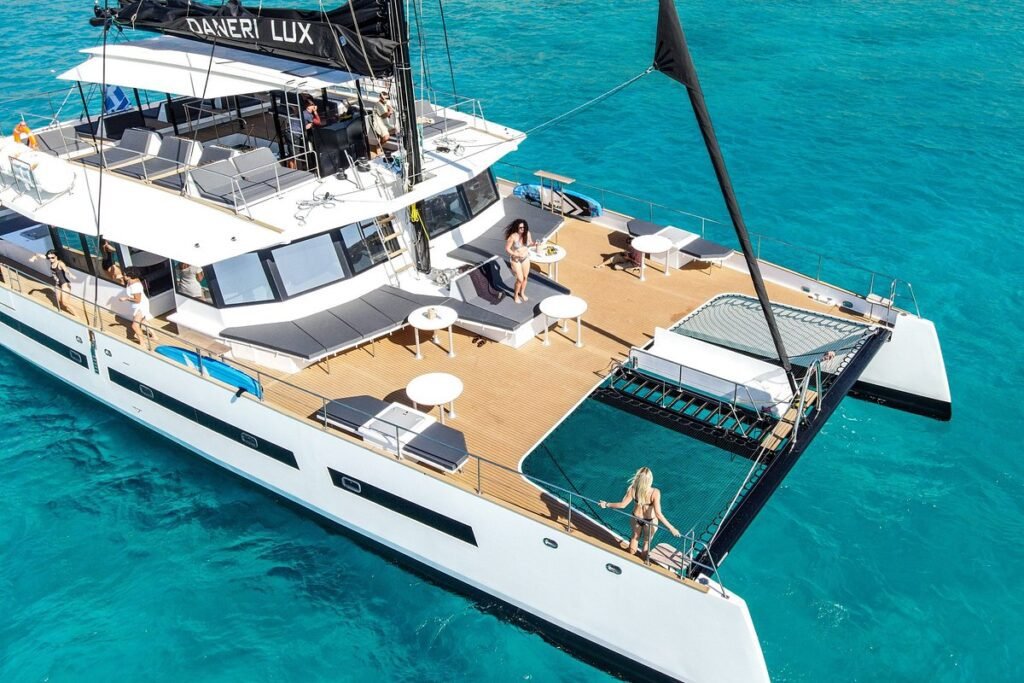
Cretan tourism increasingly caters to luxury travellers seeking seamless integration of connectivity with exclusive experiences. High-end accommodations recognise that affluent visitors expect constant connectivity; Elounda Mare (a seven-star resort near Agios Nikolaos, 65 km east of Heraklion) includes not merely WiFi but a dedicated IT concierge available 24/7 for technology support. Private yacht charter in Crete services similarly provide satellite connectivity ensuring guests maintain communications from any anchorage. If you’re planning to combine active work obligations with luxury travel—managing business commitments whilst enjoying Mediterranean retreat—these high-end options guarantee seamless integration.
The practical interplay between connectivity and curated experiences operates on multiple levels. A travelling professional coordinating with international teams can participate in Crete honeymoon packages or romantic getaways whilst maintaining professional obligations. Modern luxury tours recognise this duality; bespoke itineraries increasingly include “work-compatible” accommodation—meaning fibre-optic connectivity, dedicated work surfaces, and scheduled free time allowing morning video conferences followed by afternoon activities. This requires transparent communication with tour operators during booking; luxury providers expect such requests and design experiences accommodating them seamlessly.
Photography professionals and content creators benefit particularly from curated connectivity. If you’re documenting a Crete experience for professional purposes (travel journalism, social media brand partnerships, visual content creation), the technical demands exceed casual tourist usage. Tour operators offering photo-focused experiences—sunrise shoots at geological formations, structured golden-hour sessions at archaeological sites, water-based photography from boats—integrate connectivity planning into their service model. High-speed mobile data enables immediate backup of expensive photography sessions, ensuring content is protected immediately against device loss or damage. Some luxury operators provide temporary office space at their base facilities, allowing photographers to offload and backup content between field sessions.
Summary & Final Connectivity Strategy
Optimal Crete connectivity requires choosing one clear strategy rather than attempting hybrid approaches. For EU visitors staying 1-3 weeks: use your home SIM with verified roaming activated; supplement with a Vodafone tourist SIM (€20) purchased at Heraklion Airport as backup. For non-EU visitors and those prioritising independence: purchase a Vodafone Greece SIM immediately upon arrival; expect €20-40 for adequate allowance. For digital nomads and extended-stay professionals: establish monthly prepaid plans with Vodafone or Cosmote plus premium accommodation with dedicated fibre connectivity. For those requiring maximum redundancy: dual SIM phones with both Vodafone and Cosmote SIMs provide insurance against network failures at negligible cost.
The psychological shift worth embracing is that connectivity in Crete is reliable and inexpensive compared to many travel destinations. Rather than treating internet as a luxury to hope for, treat it as infrastructure you’ve explicitly arranged. This distinction—between hoping to find WiFi and actively ensuring connectivity—dramatically reduces travel stress and increases your ability to participate fully in activities, coordinate with tour operators, and genuinely immerse in experiences without digital anxiety.
Planning a private trip to Crete? 105 Olives Greece designs tailor-made luxury experiences. Explore more Crete travel guides →
