
A private tour in Crete is not just a guided trip — it is a fully personalized journey built around your schedule, interests, and pace. Unlike group excursions that rush you through landmarks, a private experience gives you complete freedom: choose where to go, when to stop, and how deep to explore. Whether you want to discover hidden gorges, taste local wine straight from a village cellar, or spend an afternoon on a secluded beach that no bus ever reaches — private tours make it possible.
Why Crete Demands More Than a Standard Tour
Crete is not a destination you can tick off in a day. The island stretches over 260 km from east to west and holds within it ancient Minoan ruins, dramatic mountain villages, white-sand beaches, and one of the oldest culinary traditions in Europe. Most tourists see a fraction of it. A private guided tour changes that entirely.
With a personal itinerary, you move through the island the way locals do — unhurried, curious, and without a flag-waving guide counting heads. Your driver knows the shortcut to the best view. Your guide knows which taverna in Rethymno has been making the same lamb dish for four generations. That knowledge does not come in a group package.
What a Private Excursion in Crete Actually Looks Like
Private tours in Crete are built from scratch, not pulled from a catalogue. A good operator starts with a conversation — what matters to you, what does not, how much walking you can handle, whether your kids need a swim break every two hours.
From there, a typical day might include:
- A morning visit to the Minoan palace of Knossos before the cruise-ship crowds arrive
- A wine tasting at a small family estate in the Heraklion wine region
- Lunch in a mountain village most tourists never find on a map
- A late afternoon hike through Samaria Gorge or a quieter trail in the White Mountains
- Sunset from the Venetian lighthouse in Chania old harbour
The Difference Between Private and Group Tours: What You Are Actually Paying For
A private tour costs more than a group excursion. But the comparison is not fair — they are different products entirely.
Group tours sell convenience: you show up at a bus stop, someone hands you a headset, and you follow a script. Private tours sell time, access, and attention. Your guide is not splitting focus between twelve people with different languages and different interests. You get answers to real questions. You stop where you want. You skip what does not interest you.
For families, couples on honeymoon, or anyone who travels with specific interests — history, food, photography, nature — a private format pays for itself in the quality of what you actually experience.
Key Regions for Private Tours in Crete
Chania is the most atmospheric part of the island — a Venetian old town, a working harbor, and mountains rising directly behind the city. Private walking tours here can go beyond the main streets into neighborhoods most visitors never enter.
Rethymno blends Venetian and Ottoman architecture with a lively food scene. A private food tour through the market and local restaurants tells the story of the island through taste.
Heraklion is the gateway to Knossos and the Archaeological Museum — the richest collection of Minoan artifacts in the world. A private guided visit to both, timed right, is a completely different experience from joining a general tour.
Eastern Crete — Elounda, Spinalonga, the Lassithi plateau — is quieter and wilder. Best explored with a local guide who knows where the roads end and the real Crete begins.
How to Choose a Private Tour Operator in Crete
The island has no shortage of companies offering private tours — but the word covers a wide range of quality. Here is what to look for:
- Customization before booking — a real private operator talks to you first. If they send you a PDF catalogue, it is not truly private.
- Local expertise — guides should know the region personally, not just professionally.
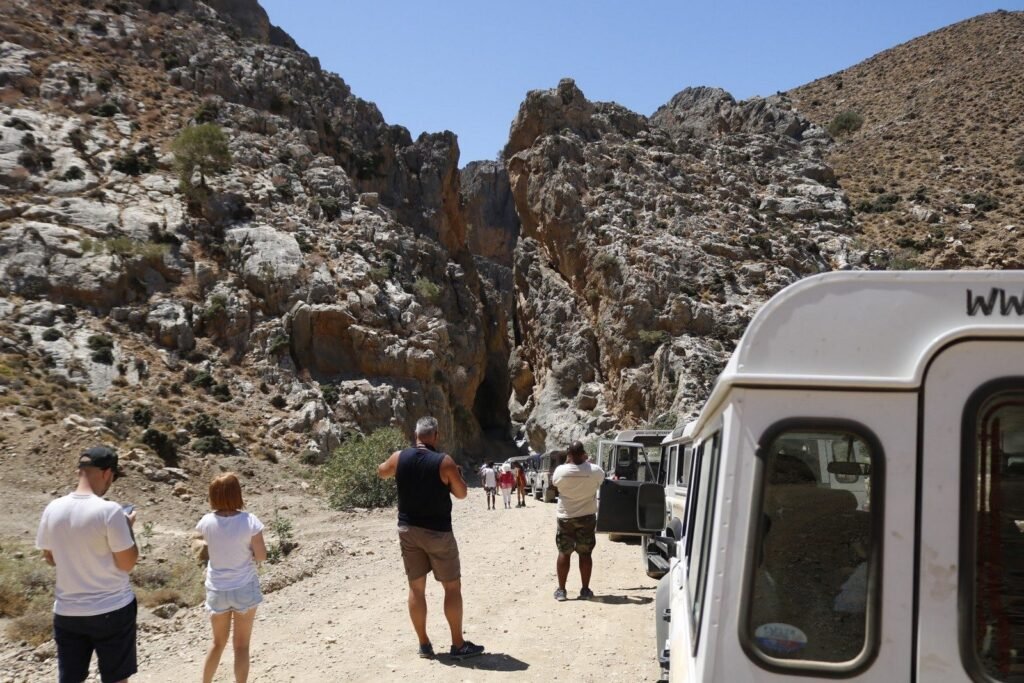
- Transparent logistics — vehicle type, pickup location, group size limits, and what is included should all be clear upfront.
- Verified reviews — check both Google and TripAdvisor; look for reviews that describe specific moments, not just “amazing experience.”
105 Olives specializes exclusively in private and tailor-made experiences across Crete. With over 50 years of combined team experience and a 5-star rating across platforms, every itinerary is built personally — starting with a free consultation before anything is booked.
When Is the Best Time to Book a Private Tour in Crete?
Spring (April–May) and early autumn (September–October) offer the best conditions for most tours: mild temperatures, fewer crowds, and landscapes that are either in bloom or in harvest. Summer is peak season — private tours still work well, but booking 2–4 weeks in advance is essential for popular dates.
For winter visits, Crete offers a quieter, more authentic experience — olive harvest season, local festivals, and villages without a tourist in sight. A well-connected private operator can build something genuinely special around the off-season.
Start With a Conversation, Not a Booking Form
The best private tours in Crete do not start online — they start with a question. What do you actually want from this trip? The answer shapes everything else.
If you are planning travel to Crete and want an experience built around your preferences rather than a fixed schedule, 105 Olives offers a free consultation with a local destination specialist. No obligation, no script — just a conversation about what matters to you, and how to make it happen.
Book your private tour in Crete at 105olivesgreece.com
Frequently Asked Questions
Typically: private transport, a licensed local guide, and all logistics. Meals, entrance fees, and accommodation are optional add-ons included on request.
Private tours are designed for your group only — whether that is 2 or 12 people. The vehicle and format adjust to your group size.
Yes — a good private guide adapts in real time. If you want to stay longer somewhere or skip a planned stop, that is always an option.
No. 105 Olives provides guides in English, German, Russian, and other languages depending on request.
For summer (June–August), at least 2–3 weeks in advance. In spring and autumn, a week is usually sufficient.
