A private food tour in Crete through Chania’s vibrant markets and family-run tavernas reveals the authentic soul of Cretan cuisine. You’ll taste olive oils pressed that morning, meet fishermen selling their catch, and dine on dishes passed down through generations—all guided by someone who knows every vendor and cook by name.
Why Chania Markets Are the Heart of Cretan Food Culture
The Old Town markets of Chania aren’t just places to buy food—they’re living museums of Mediterranean tradition. Walking through the narrow covered lanes at dawn, you encounter vendors arranging produce that arrived from family farms just hours earlier. Cretan farmers still grow the same tomato varieties their grandparents cultivated, and these taste nothing like supermarket tomatoes. The flavor is concentrated, the acidity balanced, the color deep.
The fish market in Chania operates in its original Ottoman-era building, with fishermen unloading their Mediterranean catches directly onto ice. You’ll see wild sea urchins, tiny red mullet, and octopus that locals prefer to buy still moving—a sign of absolute freshness. The cheese vendors stock graviera from the White Mountains, made from sheep that graze on wild herbs, and whey cheese (anthotyro) that’s sold warm and crumbly. This is where real Cretan food begins, and a private food tour Crete experience connects you directly to these sources rather than removing you from them with a tourist filter.
What a Private Food Tour Includes: From Market to Table
A properly structured private food tour in Chania typically begins before 9 AM, when the markets are most active and vendors have the energy to share stories. Your guide—ideally someone raised in Crete—navigates you through both the famous covered market (Agora) and the neighborhood produce stalls that tourists never find. You’ll taste fresh olives in brine, sample several varieties of local cheese, and understand the difference between early-harvest and late-harvest olive oils by actually tasting them side by side.
The market portion typically lasts two to three hours, moving at a relaxed pace with plenty of time for questions and photography. Then comes the taverna phase. Rather than a single fancy restaurant, a quality private food tour Crete itinerary takes you to two or three family-owned establishments—places where the owner’s mother might walk out of the kitchen to greet you. You eat what’s actually good that day, not what’s on a printed menu. If the fisherman brought exceptional wild sea bass this morning, that’s what you eat. If the greens foraging was excellent last week, horta (boiled wild greens) with lemon and olive oil appears on your plate.
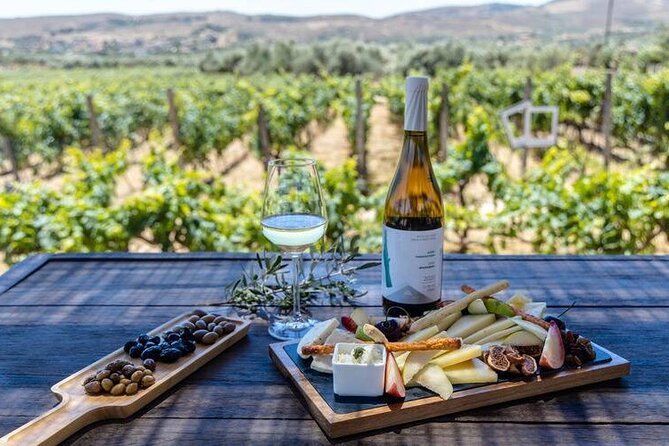
Most private tours include wine tastings paired with dishes, using wines from small Cretan producers rather than mass-market labels. You’ll likely taste a local white like Vidiano alongside fresh fish, and a red Kotsifali with slow-cooked lamb. The entire experience—market to final taverna course—typically runs six to seven hours and costs between 120 EUR and 180 EUR per person for a small group, or around 350-500 EUR for a private couple or family booking.
| Tour Element | Duration | What You Experience | Typical Cost |
|---|---|---|---|
| Chania Old Market Walk | 2-3 hours | Vendor interactions, tastings, seasonal produce education | Included |
| Olive Oil Tasting | 20 minutes | 3-4 oils from different regions or harvest times | Included |
| First Taverna (appetizers/cheese) | 90 minutes | Saganaki, horta, local cheeses, bread | Included |
| Second Taverna (main course) | 90 minutes | Fish, meat, or vegetable mains with wine pairing | Included |
| Total Private Tour | 6-7 hours | Complete food journey with guide | 350-500 EUR |
The Tavernas Worth Your Time: Beyond Tourist Traps
Not all tavernas in Chania offer authentic food. The ones facing the harbor, with laminated menus and pictures of dishes, serve tourists and cruise ship passengers. The ones worth your time sit one or two streets back, have no pictures on the menu, and change their offerings daily based on what’s available. These are the establishments where locals actually eat dinner, which is the most reliable indicator of quality anywhere in the Mediterranean.
A private food tour Crete guide worth their salt knows taverna owners personally—they’ve eaten there dozens of times, they know which dishes are non-negotiable, and they can call ahead to ensure the kitchen prepares something special for visitors genuinely interested in food. Imagine walking into a family kitchen where the owner’s sister is preparing the evening meal, and she’s willing to explain her technique and the source of every ingredient. This happens regularly on properly organized private tours, and it’s the experience that changes how people understand food.
Some consistently excellent taverna neighborhoods include the Venetian Harbor area (away from the main waterfront promenade), the lanes around the Firkas Fortress, and the working-class neighborhoods of Koum Kapi and Kasteli. In these areas, you’ll find tavernas serving three-course meals for 20-25 EUR, where the owner has been using the same suppliers for twenty years, and where the concept of “authentic Cretan food” isn’t marketing language—it’s their grandmother’s recipe written down (finally) so their daughter could make it correctly.
What You’ll Actually Eat: The Cretan Dishes That Matter
Cretan cuisine is deceptively simple: excellent raw ingredients, minimal intervention, maximum respect for flavor. A private food tour in Chania introduces you to dishes tourists often miss because they’re not visually impressive or don’t appear on English menus.
Horta (wild greens boiled with olive oil and lemon) seems boring until you taste it made with greens foraged from Cretan hillsides, dressed with oil that tastes like fresh-cut grass and green tomatoes. Fava (a puree of yellow split peas) is served as a meze with crusty bread and raw onion; it’s humble, it’s filling, and it’s been eaten in Crete for millennia. Saganaki (fried cheese) becomes memorable when the cheese is graviera from the White Mountains, fried just until the outside browns while the inside remains melting. Dakos (barley rusks rubbed with tomato, topped with cheese and oregano) appears everywhere, but truly good dakos uses tomatoes at peak ripeness and cheese that actually tastes like something.
Then come the larger dishes. Pastitsada is oxtail stewed in tomato and wine until it falls off the bone, traditionally served during Easter celebrations. Slow-roasted lamb or goat comes in portions large enough for two people, seasoned simply with salt, pepper, and oregano, with the meat so tender it barely requires chewing. Fresh fish—grilled whole with just olive oil, lemon, and salt—tastes like an entirely different protein than fish prepared in northern kitchens. The difference is the fish (caught that morning), the olive oil (harvested in November from local groves), the lemon (from trees in every Cretan backyard), and the salt (which is salt).
| Cretan Dish | Main Ingredients | Best When | Why Try It |
|---|---|---|---|
| Horta | Boiled wild greens, olive oil, lemon | Spring/early summer | Foundation of Cretan diet; taste the terroir |
| Saganaki | Graviera cheese, fried | Year-round | Experience the dairy tradition |
| Dakos | Barley rusk, tomato, cheese | Summer (tomato season) | Authentic street food prepared correctly |
| Pastitsada | Oxtail, tomato, wine, pasta | Fall/winter | Complexity built from patience and tradition |
| Grilled Fish | Whole wild fish, olive oil, lemon | Year-round | Simplicity revealing quality of ingredients |
| Stifado | Rabbit or beef, pearl onions, wine | Fall/winter | The essence of Cretan slow cooking |